
A flashlight is required equipment for night flying, and most pilots carry two. But a light that cycles through a blinding 1,000-lumen white mode to reach its red setting will cost you the night vision you spent 30 minutes building. The right pilot flashlight is really two lights: bright white for the walkaround, and dim colored light for the cockpit.
Here's what actually matters in a flashlight for pilots, and six lights worth putting in the flight bag. One of them is ours, and we'll be upfront about that.
In this guide
What Matters in a Pilot Flashlight
- Direct mode access. The most repeated advice from pilots: never buy a light that forces you to cycle through bright white to reach the dim mode. Separate switches or a selector dial, always.
- Two brightness tiers for two jobs. A few hundred lumens of white for sumping fuel and checking control surfaces; single-digit-to-50 lumens of colored light for charts and the panel.
- Red vs green is a real debate. Red preserves dark adaptation best, but red light makes the magenta and red print on sectional charts disappear. Green reads charts cleanly and is where much of military cockpit lighting went. Many pilots now carry green for exactly this reason.
- Hands-free capability. Preflight means one hand on the cowl and one on the dipstick. Fuel sampling, chart folding, and cowl latches are two-hand jobs.
- Battery philosophy. AA/AAA lights mean spares live in the flight bag. Rechargeables mean less waste and, in some models, a phone-charging backup. Carry one of each and you've covered both failure modes.
1. Best Hands-Free: DEX FingerLight

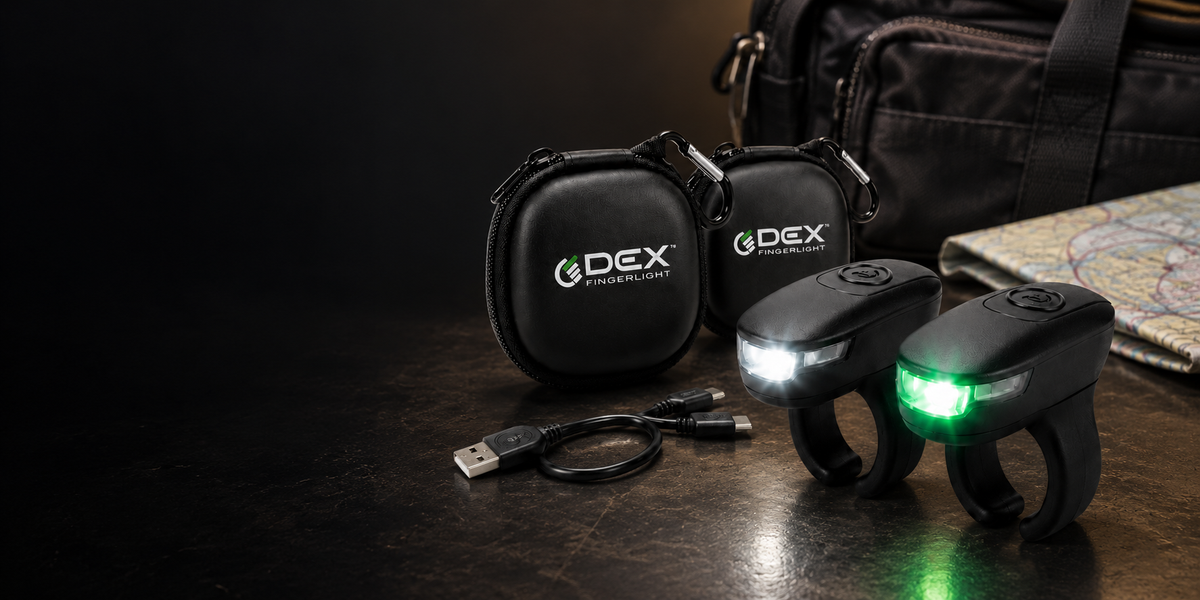
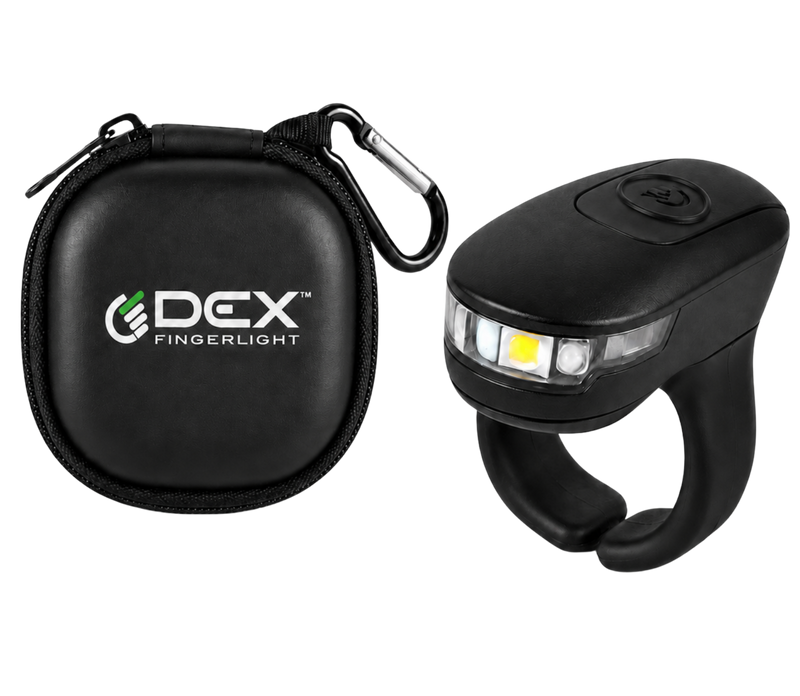
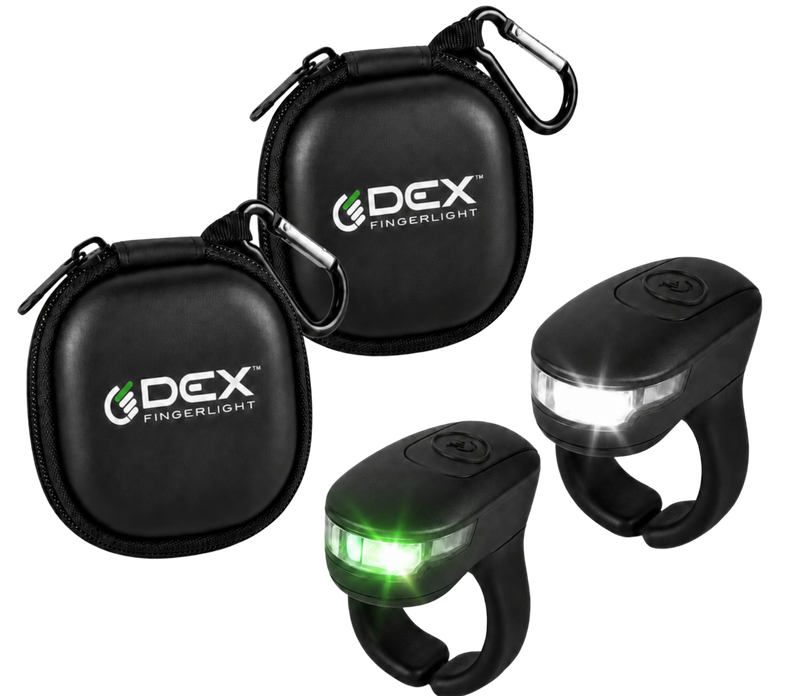
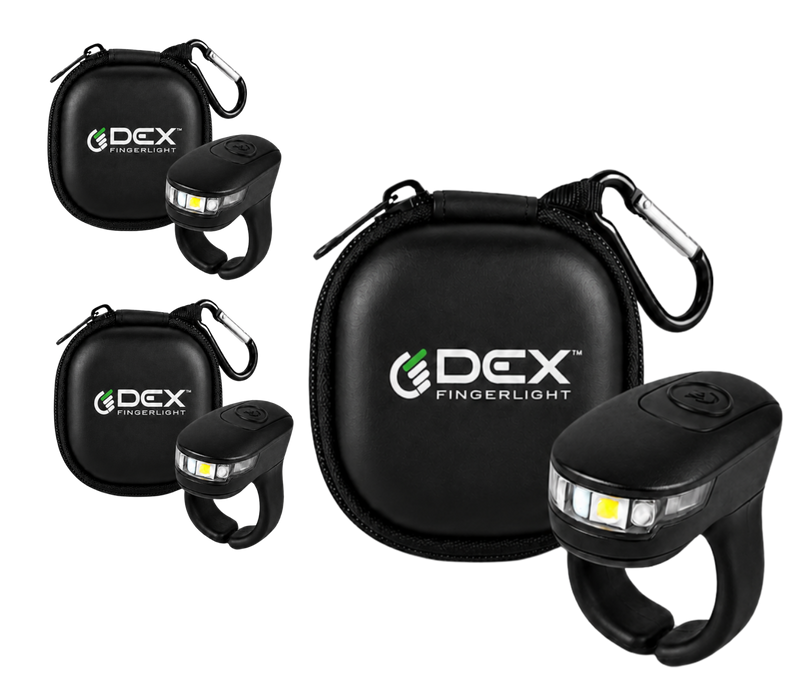
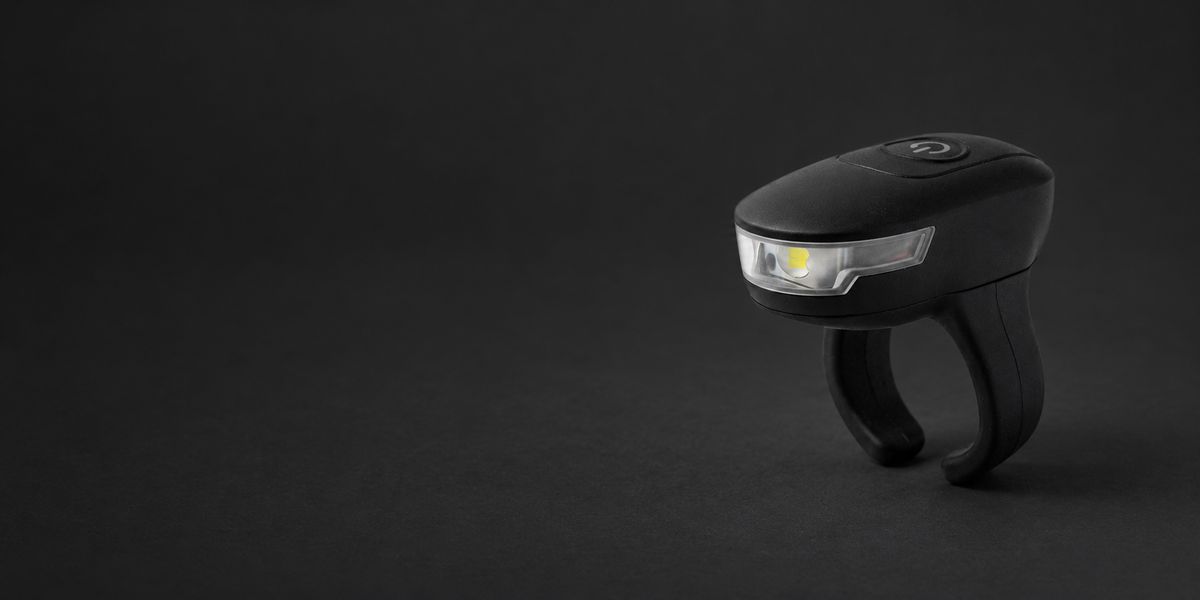
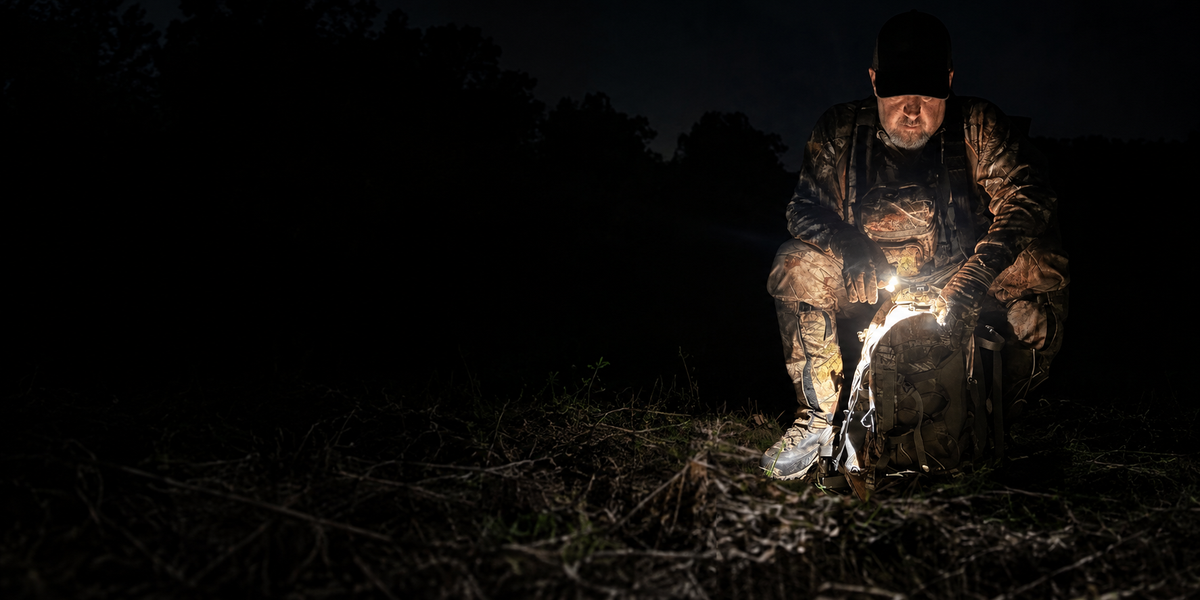
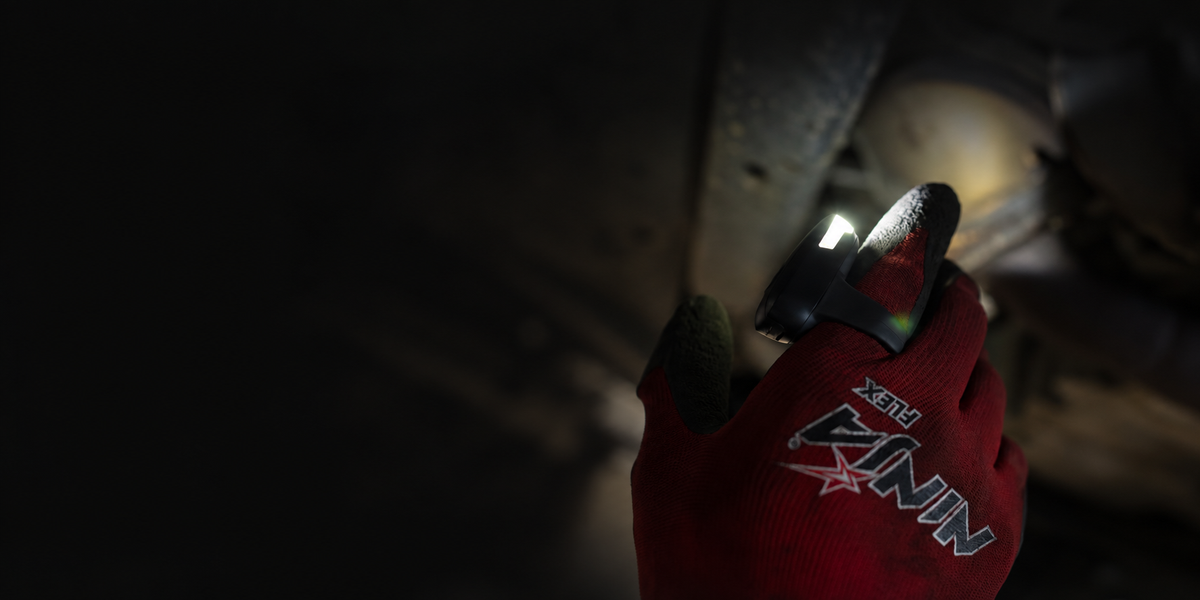
The DEX FingerLight rides on your finger, so light goes wherever you point: into the fuel tester, along the leading edge, at the squawk you're writing down. Both hands stay on the airplane. Sporty's own flashlight buying guide lists finger lights among its hands-free picks and calls out the DEX by name for its waterproofing and night-vision green mode. It anchors our hands-free aviation light collection.
Why pilots like it:
- Bright white for the walkaround, Dim for the flight bag, and Stealth Green for the cockpit, with direct access and mode memory, so it never blinds you with white at night
- Truly hands-free without a headband over a headset
- IPX7 waterproof, half an ounce, fits over gloves
- USB-C recharge in under 2 hours, lifetime warranty
Honest cons: it's a task light, not a 1,000-lumen ramp floodlight, and 45 minutes of runtime on Bright means it's your close-work light, not your only light. Carry it with a bright backup, like everything else on this list.
2. Best Do-Everything: Flight Outfitters Bush Pilot

The Flight Outfitters Bush Pilot is the premium pick: a five-position selector dial that goes straight to the mode you want, 1,000 lumens on high, a low green stealth mode with enormous runtime, and a party trick, it doubles as a 2,600mAh power bank for your phone or iPad on a cross-country.
Best for: Pilots who want one serious light that does everything.
Honest cons: the priciest light here, rechargeable-only with no battery fallback, and bigger than a pocket light.
Shop the Bush Pilot:
Buy at Pilots HQ3. The Classic: Sporty's Dual Color LED

Sporty's Dual Color LED Flashlight is the house classic from the biggest pilot shop in the country: five white LEDs for preflight on one end of the switch, a red LED for the cockpit on the other, running on three AAAs with a lifetime guarantee.
Best for: Traditionalists and flight bags that already hold AAA spares.
Honest cons: no published lumen figure, no rechargeable option, and at 6 ounces it's heavier than it looks.
Shop Sporty's Dual Color:
Buy at Sporty's4. Best Budget: Smith & Wesson Night Guard

The Smith & Wesson Night Guard Dual Beam is the budget answer: 310 lumens of white, a separate red LED with its own button, aircraft-aluminum body, three AAAs. For the price of lunch, every flight bag can have a dual-color backup.
Best for: Students, renters, and the "backup to the backup" slot.
Honest cons: modest 2.25-hour runtime and no rechargeable option.
Shop the Night Guard:
Buy at MyPilotStore5. Most Clever: Flight Gear Bite Light

The Flight Gear Bite Light attacks the same hands-free problem a different way: a silicone bite ring lets you hold it in your teeth while both hands fold a chart or sump a tank. White and red with independent switches, USB-C, and a serious IP68 rating.
Best for: Pilots who want dual-color plus an emergency hands-free option.
Honest cons: holding a flashlight in your teeth is a workaround, not a solution, and there's no green option.
Shop the Bite Light:
Buy at Sporty's6. Best Headlamp: Flight Outfitters Horizon

The Flight Outfitters Horizon Headlamp is a pilot-specific headlamp: white with adjustable focus plus two levels of red, on separate switches, no cycling. Runs on AAAs, pivots down at the kneeboard.
Best for: Night preflights and checklist reading if you don't mind a band over your hat.
Honest cons: 80 lumens of white is weak for a dark ramp, and headlamps fight with headsets.
Shop the Horizon Headlamp:
Buy at Flight OutfittersPilot Flashlight Questions
Do pilots need a flashlight?
Yes. A flashlight is on every night-flying checklist, and FAR 91.503 requires one for large and turbine aircraft operations. Most instructors teach carrying two: a bright light for preflight and a dim colored light for the cockpit, plus spare batteries or a charged backup.
Should a cockpit flashlight be red or green?
Red preserves night vision slightly better, but it makes the magenta and red markings on sectional charts unreadable. Green light keeps charts legible and still protects dark adaptation far better than white, which is why military cockpits largely moved to green and blue-green lighting. Many pilots now carry green; either beats white.
What is the best hands-free light for preflight?
A finger-mounted light like the DEX FingerLight keeps both hands on the airplane while the beam follows your point: fuel tester, oil dipstick, control surfaces. Headlamps work too but fight with headsets and blind anyone you look at; bite lights are a clever backup.
How many lumens does a pilot flashlight need?
Two numbers, not one: a few hundred lumens of white for the walkaround, and roughly 5 to 50 lumens of red or green for the cockpit. A single super-bright mode with no dim option is the wrong tool at night.
Share:
DEX FingerLight vs Torch Ring: An Honest Comparison
The Best Stocking Stuffers for Hunters