
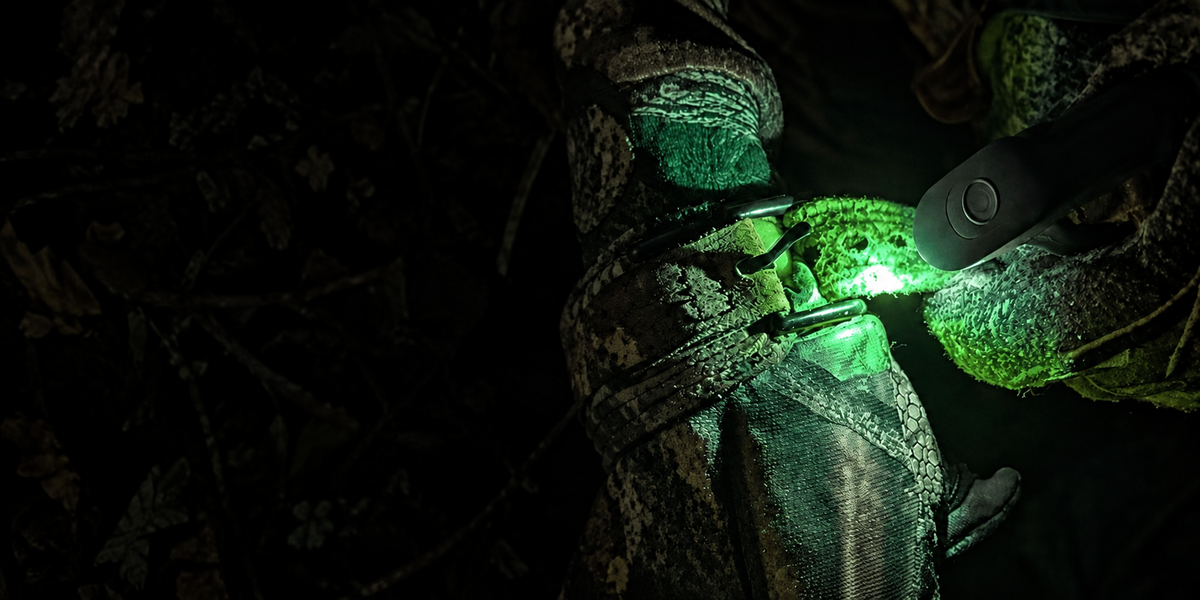
Every hunter has a theory about light and deer. Some swear by red, some by green, some claim any light ends the hunt. The good news is this isn't a matter of opinion. Deer vision has been studied in detail, and the science gives you a clear playbook.
Here's what research actually says about whether green light spooks deer, why blue is the color to fear, and how to use light in the deer woods without getting picked off.
In this guide
The Short Answer
Deer can physically detect green light, so no colored light is truly invisible to them. But detection isn't the same as alarm. A dim, briefly used, downward-angled green or red light is dramatically less likely to blow a hunt than white light, and blue-heavy light is the worst thing you can carry. How you use the light, brightness, duration, and direction, matters as much as the color.
How Deer Actually See
Research from the University of Georgia's deer lab established that whitetails are dichromats: they have two cone types, with peak sensitivities around 450 nanometers (blue) and 537 nanometers (green). Humans have a third cone for red. Deer don't.
- Deer are extremely sensitive to blue. Estimates run up to 20 times more sensitive than humans in the short wavelengths, partly because deer lack the UV-blocking filter human eyes have.
- Deer effectively can't see red as color. Red wavelengths fall outside their cone range, which is why blaze orange reads as muted gray-brown to a deer.
- Green sits near a deer's second cone peak. They detect it, though without the color punch we perceive.
- Deer own the night. A reflective layer behind the retina and a wide pupil give deer night vision many times better than ours, and they process motion in low light roughly 2.5x faster than we do.
Ranking Light Colors Around Deer, Safest to Worst
- Red: least visible to deer. The science is straightforward: red falls outside deer cone sensitivity. It's the most conservative choice for close encounters.
- Green: detectable but manageable, and far more usable for you. Deer can perceive green, so keep it dim and brief. The tradeoff: the human eye is most sensitive to green, so a green beam looks much brighter to you per unit of power. You see the trail, the blood, and your gear clearly at output levels that stay subtle.
- White: the hunt-ender. Full-spectrum light includes the blue wavelengths deer see best, at high intensity, with hard shadows and motion.
- Blue-heavy light: the worst. Blue is the center of deer visual sensitivity. Cheap "cool white" LEDs skew heavily blue. If your light looks icy white, it's shouting at every deer in the county.
One honest note: you'll find lights marketed with the claim that green "can't be seen" by game. That overstates it. Deer detect green. The realistic claim, and the one the science supports, is that dim green light used briefly is far less alarming than white light, while being far more useful to your own eyes than red.
What Light Does to Your Night Vision
The other half of the equation is your own eyes. Your night vision runs on a rod pigment called rhodopsin that takes 20 to 30 minutes of darkness to fully regenerate. Bright white light bleaches it instantly, and you start the clock over.
Red light preserves dark adaptation best, which is why astronomers use it. Green costs a little more adaptation than red, but delivers far better detail and reach at low power, which is why militaries moved much of their low-level and cockpit lighting to green. For a hunter easing to a stand, dim green is the practical middle: enough acuity to move quietly and check gear, without torching your night vision the way white does.
The Practical Playbook
- Use the least light that does the job. Dim beats bright every time near bedding or a stand.
- Point it down and shield it. A beam at your boots reads very differently to a deer than a beam swept at eye level.
- Keep it brief. Check the trail, kill the light, keep moving. Constant light plus motion is what educates deer.
- Skip the blue-white budget LED. Whatever you carry, avoid cool-white lights around game.
- Keep both hands free. Climbing sticks, bow hooks, fence crossings: the walk-in is a two-hand trip.

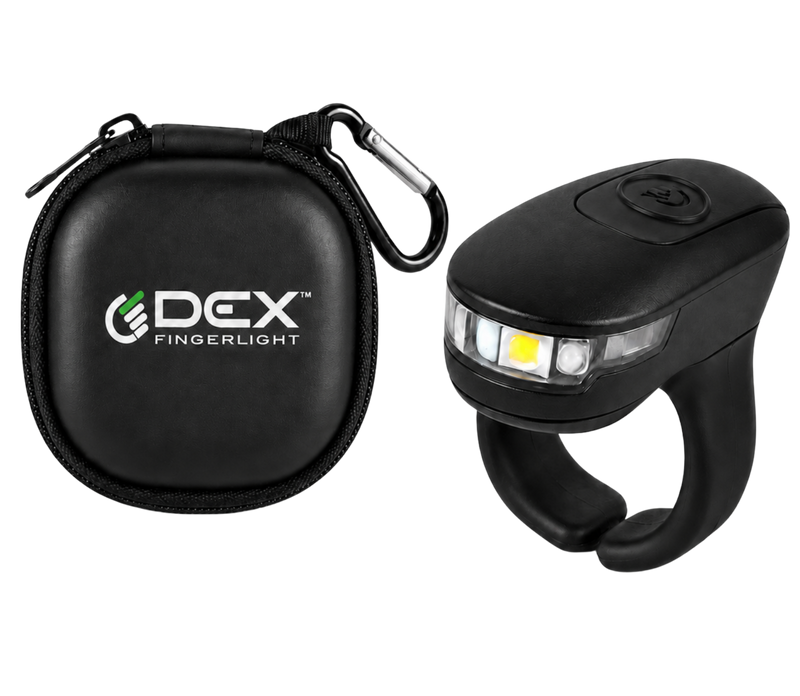
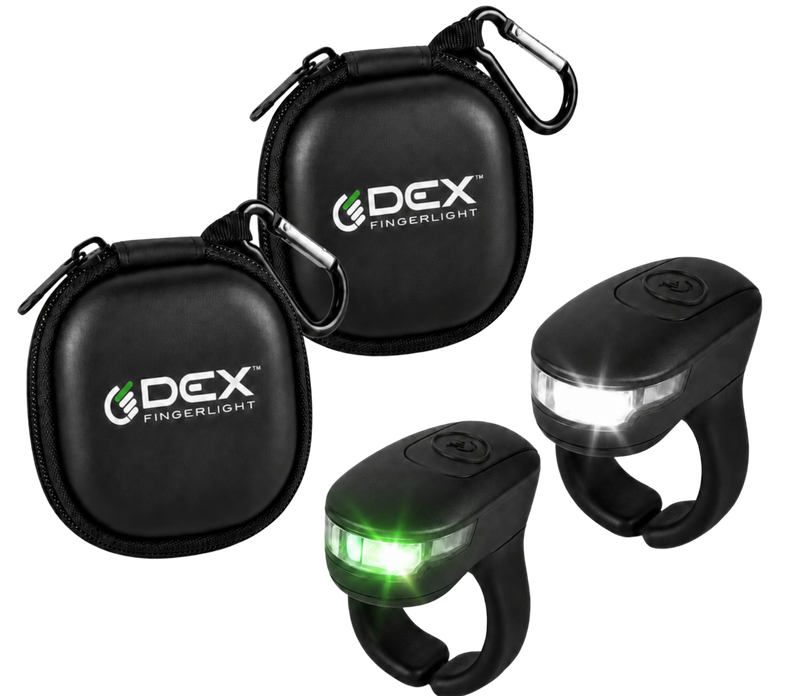
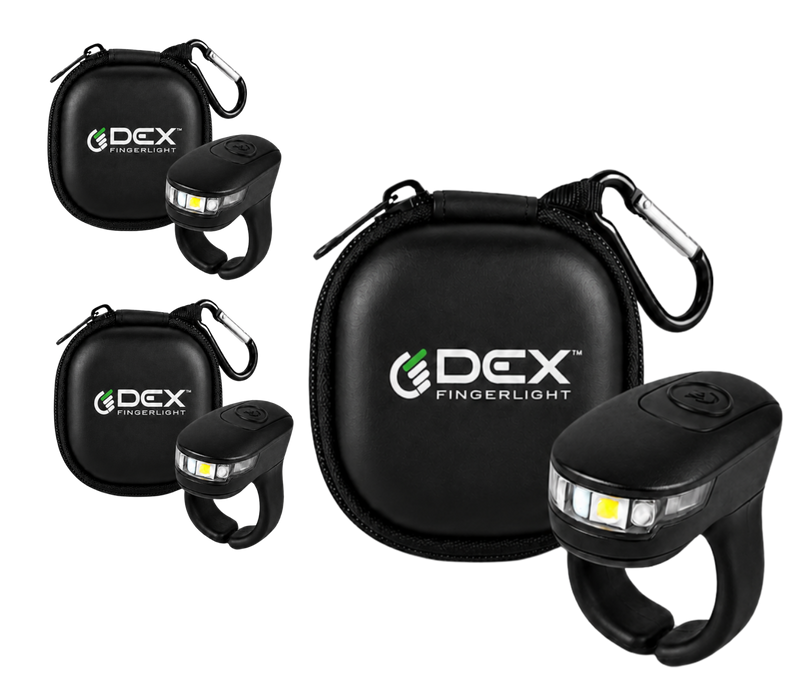
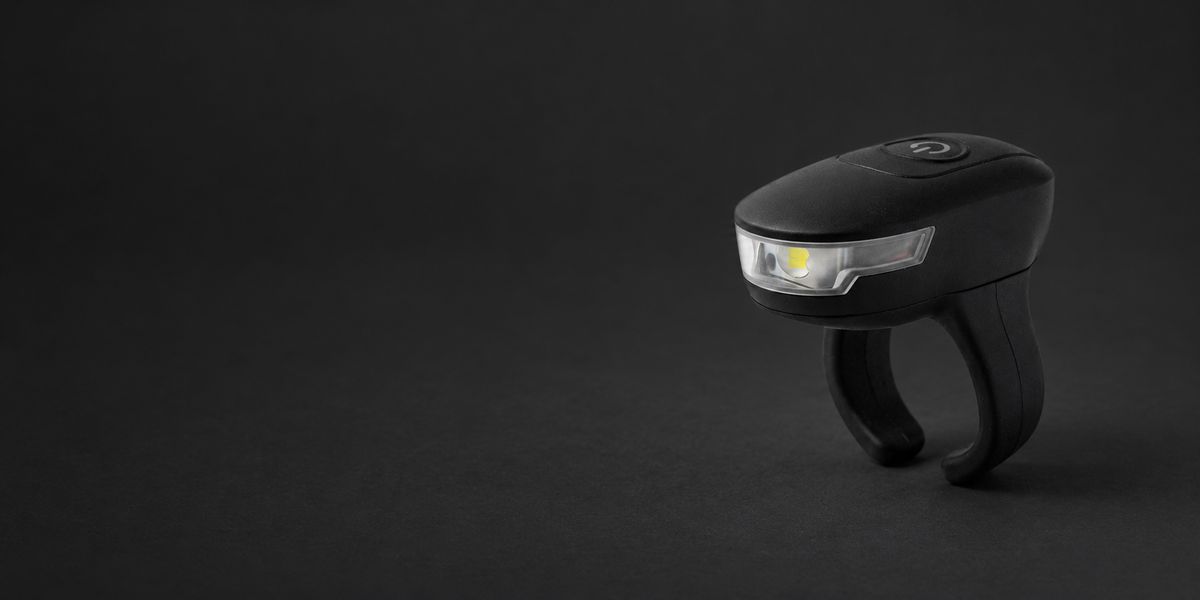
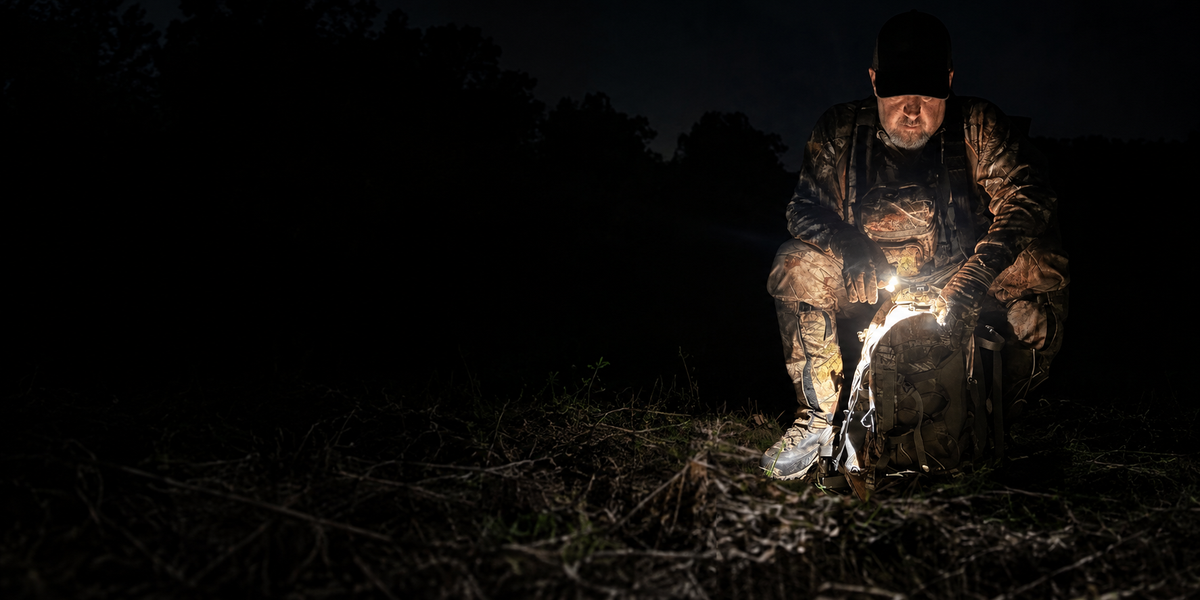
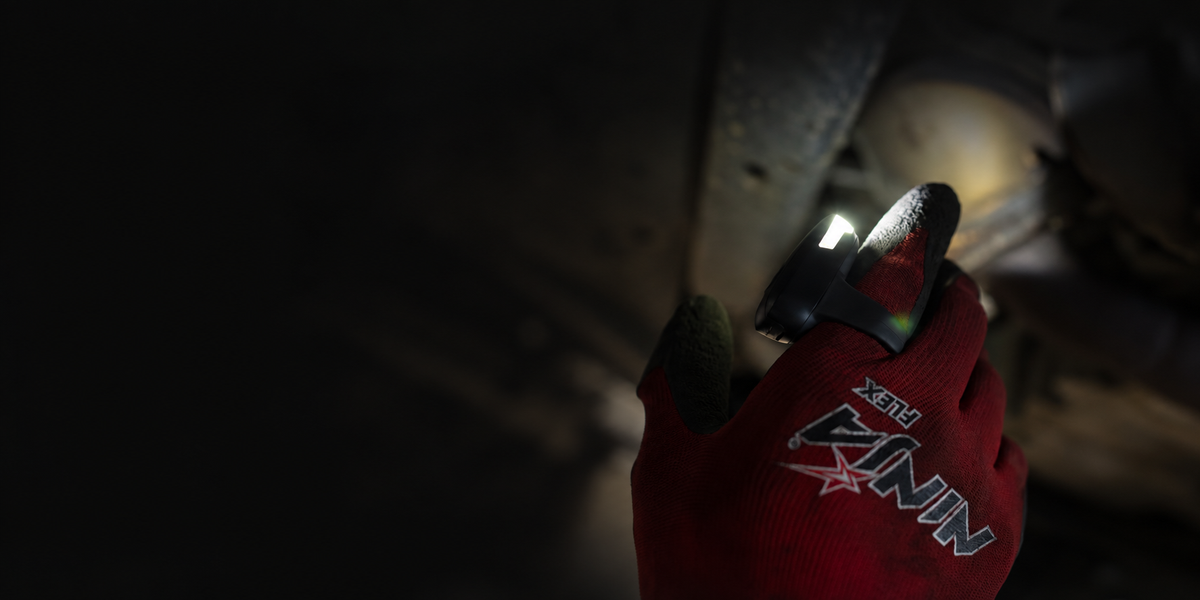
This playbook is exactly why we gave the DEX FingerLight a dedicated Stealth Green mode: dim, green, aimed by your finger at the ground in front of you, and off in one click. Mode memory means it never surprises you with white light at 5 a.m., and IPX7 waterproofing means the weather is irrelevant. The full green light for hunting collection has single lights and multipacks built around it.
Green Light and Deer Questions
Does green light spook deer?
Deer can detect green light, so it's not invisible to them. But dim green light used briefly and pointed down is far less alarming than white light, which contains the blue wavelengths deer see best. Red is the least visible color to deer; green is the best compromise between staying subtle and actually seeing what you're doing.
What color light can deer not see?
Deer effectively cannot see red as a color; it falls outside their two cone types (peaks near 450nm blue and 537nm green). They are most sensitive to blue light, by some estimates up to 20 times more sensitive than humans.
Why do hunters use green lights instead of red?
The human eye is most sensitive to green, so a green light looks brighter and shows more detail at the same power. Hunters get usable light for trails, gear, and blood at outputs low enough to stay subtle. Red preserves your night vision slightly better but shows you much less.
Will a flashlight ruin my hunt walking in?
Used carelessly, yes. Used well, no: keep it dim, colored (green or red), pointed at the ground, and brief. Avoid cool-white LEDs entirely around game, and keep your hands free so you move quietly instead of juggling gear.
Share:
Headlamp Alternatives for Close-Up Field Work
The Best Flashlight for Pilots, Preflight to Final